Table of contents
- 01Lifespan by roof type
- 02Slate and tile roofs
- 03Flat roof systems
- 04Factors that shorten roof life
- 05How maintenance extends lifespan
- 06When to plan replacement
One of the most common questions we get asked is: how long should a roof last? It is a fair question — a new roof is a significant investment, and you want to know it is going to stand up to Worcestershire weather for decades, not years. The answer depends on the material, the quality of the installation, and how well the roof has been maintained over its life.
This guide gives you realistic lifespan figures for every common roof type found on homes across Worcester, Malvern, Droitwich, Pershore, Evesham and the wider county. We also cover the factors that shorten a roof's life and the maintenance that extends it — because a well-looked-after roof will always outlast a neglected one.
Lifespan by Roof Type
There is no single answer to how long a roof lasts because different materials age at very different rates. Here is a summary of the expected lifespan for the most common roof coverings used on UK homes:
- Concrete interlocking tiles: 40 to 50 years
- Concrete plain tiles: 40 to 50 years
- Clay plain tiles: 60 to 80 years or more
- Natural slate (Welsh or Spanish): 80 to 100+ years
- Man-made (fibre cement) slate: 40 to 50 years
- EPDM rubber flat roofing: 30 to 50 years
- GRP fibreglass flat roofing: 25 to 35 years
- Torch-on felt flat roofing: 15 to 25 years
- Leadwork (flashings, valleys): 40 to 60+ years
These are expected ranges for quality materials installed correctly and maintained reasonably. A poorly installed roof of any material will fail sooner. A well-maintained roof may exceed these ranges. Let us look at each category in more detail.
Slate and Tile Roofs
Pitched roofs with tiles or slate are the most common roof type on Worcester homes. They are also the longest-lasting — which is why you see slate roofs on Victorian and Edwardian properties across Malvern, Barbourne and St John's that are still sound after 100 years or more.
Concrete Interlocking Tiles
Concrete interlocking tiles — such as Marley Modern, Redland 49 and Sandtoft Standard — are the most common roof covering on post-1960s homes across Worcestershire. They are durable, cost-effective and widely available. Expected lifespan is 40 to 50 years. The tiles themselves are hard-wearing, but the nail fixings and the underlay beneath them typically fail first — nails corrode after 30 to 40 years, and bitumen felt underlay perishes in the same timeframe. So a 40-year-old concrete tile roof may have sound tiles but failing fixings, which is why re-roofing becomes necessary even when the tiles look fine from the ground. See our tile roofing page for more on concrete and clay tiles.
Clay Plain Tiles
Clay plain tiles — traditional, attractive, and seen on many period properties — have a longer lifespan than concrete. A good quality clay tile roof lasts 60 to 80 years or more. Clay is less prone to the spalling and surface degradation that affects concrete over decades. The fixings and underlay still age, but the tiles themselves are genuinely long-lasting. Clay plain tiles cost more than concrete (you need around 60 per square metre, and they take longer to lay), but their longevity helps justify the investment.
Natural Slate
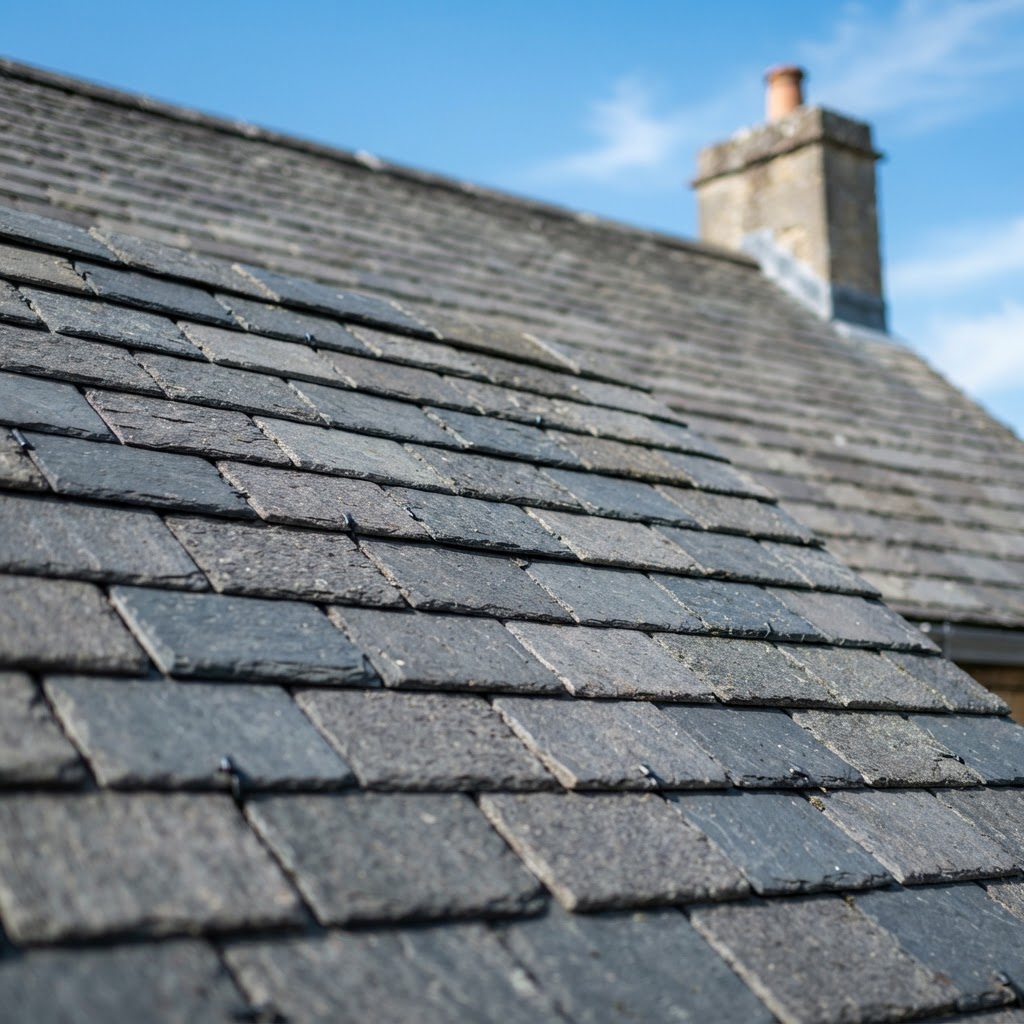
Natural slate is the longest-lasting roof covering commonly available. Welsh slate is the premium — dense, impermeable and incredibly durable, with a lifespan of 80 to 100 years or more. Some Welsh slate roofs in the UK are still serviceable after 150 years. Spanish slate is also widely used and offers a similar lifespan at a lower cost. Slate does not degrade in the way concrete does — it is a natural stone that is impervious to frost and UV. What fails on a slate roof is usually the nails (a problem known as "nail sickness") or the underlay. See our slate roofing page for more on slate installation and repair.
Man-Made (Fibre Cement) Slate
Fibre cement slates — such as Marley Eternit — are manufactured to mimic the look of natural slate at a lower cost. They have a lifespan of 40 to 50 years. They are a good mid-range option for homeowners who want the slate look without the slate price tag. They do not last as long as natural slate, but they outperform felt and are a sensible choice for many properties.
Flat Roof Systems
Flat roofs — on extensions, garages, dormers and some commercial properties — have different materials and different lifespans. The old image of a felt flat roof that fails after 10 years is outdated, but felt still has the shortest lifespan of the three main options.
EPDM Rubber
EPDM (ethylene propylene diene monomer) rubber roofing is a synthetic rubber membrane supplied in large, seamless sheets. It is UV-stable, flexible, and resistant to ozone and temperature extremes. A properly installed EPDM roof lasts 30 to 50 years. It is our recommended flat roofing material for most domestic situations. See our EPDM rubber roofing page and our EPDM explainer guide for more detail.
GRP Fibreglass
GRP (glass reinforced plastic) fibreglass roofing is a seamless, rigid system applied in situ. It is extremely tough and completely seamless, making it excellent for roofs with complex shapes. Lifespan is 25 to 35 years. It is slightly more expensive than EPDM but offers a harder-wearing surface. See our GRP fibreglass roofing page for more.
Torch-On Felt
Torch-on felt (modified bitumen) is the traditional flat roofing material, applied in two or three bonded layers. It has the shortest lifespan of the three — 15 to 25 years. It remains a valid budget option, but for a roof you want to last, EPDM or GRP are better choices. See our felt roofing page for more.
Factors That Shorten Roof Life
A roof's lifespan is not fixed — it is shortened or extended by how the roof is treated. Here are the factors that reduce a roof's life below its expected range:
- Poor installation. Tiles nailed incorrectly, underlay laid with gaps, flashings fitted without proper bedding — these all cause premature failure. This is why choosing a competent roofer matters. See our guide on how to choose a roofer in Worcester.
- No maintenance. Roofs need periodic inspection and minor upkeep. Blocked valleys, moss growth and slipped tiles left unaddressed all accelerate degradation. See our roof maintenance service.
- Moss and plant growth. Moss holds moisture against tiles, speeding up frost damage. Roots from plants growing on the roof break the weather seal between tiles.
- Poor ventilation. Condensation in a poorly ventilated loft dampens the underlay and timbers from below, causing rot and premature failure.
- Storm damage left unrepaired. A few tiles blown off in a storm and not replaced let water into the underlay and timbers, causing damage that spreads well beyond the original problem.
- Low-quality materials. Cheaper, thinner tiles or inferior underlay will not last as long as quality equivalents. This is one area where saving money upfront costs more long-term.
How Maintenance Extends Lifespan
Regular maintenance is the single biggest factor in extending a roof's life beyond its expected range. A roof that is inspected annually, cleared of moss and debris, and repaired promptly when minor problems appear will outlast a neglected roof by years — sometimes decades.
Maintenance does not mean constant work. It means an annual inspection (ideally in autumn, before winter weather), prompt repair of any slipped tiles or cracked flashings, and periodic clearing of valleys and gutters. For properties with heavy moss growth, a professional moss clearance and treatment every few years prevents the moisture damage that spalls concrete tiles.
Think of it like servicing a car — a small, regular investment that prevents large, unexpected bills. A roof that is maintained can reach the upper end of its lifespan range. A roof that is ignored will reach the lower end, or fall short of it entirely.
When to Plan Replacement
If you know the age and material of your roof, you can plan ahead. A concrete tile roof approaching 40 years, a felt flat roof approaching 20 years, or a thatched roof approaching 25 years — these are all entering the window where replacement becomes likely. Planning ahead means you can budget for it, choose a roofer at your own pace, and avoid the panic of an emergency replacement when a storm finally finishes the roof off.
If you do not know the age of your roof, a roofer can estimate it from the tile type, fixing style and underlay condition. Most homes built in the 1970s and 1980s across Worcester, Droitwich, Malvern and Redditch with concrete interlocking tiles are now in the replacement window. See our 10 signs you need a new roof guide to check whether your roof is showing symptoms, and our new roof cost guide to understand the investment involved.
If you want to know how much life your roof has left, book a free inspection or call us on 01905 349450. We cover all of Worcester and Worcestershire.
Summary
How long a roof lasts depends on the material, the installation quality, and the maintenance it receives. Natural slate lasts 80 to 100+ years, clay tiles 60 to 80, concrete tiles 40 to 50, EPDM flat roofing 30 to 50, GRP 25 to 35, and felt 15 to 25. These are ranges, not guarantees — a well-maintained roof will outlast a neglected one by years. If your roof is approaching the end of its expected lifespan, a professional inspection will tell you how much life it has left and whether repair or replacement is the right call.
Related resources
FAQ
Frequently asked questions
How long does a roof last in the UK?+
It depends on the material. Concrete interlocking tiles last 40 to 50 years, clay plain tiles 60 to 80 years, natural slate 80 to 100+ years, EPDM rubber flat roofing 30 to 50 years, GRP fibreglass 25 to 35 years, and torch-on felt 15 to 25 years. These are expected ranges for quality materials installed and maintained correctly.
What is the lifespan of different roof types?+
Natural slate is the longest-lasting at 80 to 100+ years, followed by clay plain tiles (60 to 80 years), concrete tiles and man-made slate (40 to 50 years), EPDM rubber (30 to 50 years), GRP fibreglass (25 to 35 years), and torch-on felt (15 to 25 years).
How can I extend my roof's life?+
Regular maintenance is the biggest factor. Have your roof inspected annually, clear moss and debris from valleys and gutters, repair slipped tiles and cracked flashings promptly, and ensure your loft is properly ventilated. A maintained roof will reach the upper end of its lifespan range.
When should I plan roof replacement?+
If your roof is approaching the end of its expected lifespan for its material (e.g. 40+ years for concrete tiles, 20+ years for felt), plan ahead. A roofer can estimate the age and remaining life from an inspection. Planning means you can budget and choose a roofer at your own pace, rather than dealing with an emergency.
Does roof maintenance really make a difference to lifespan?+
Yes, significantly. A roof that is inspected annually and repaired promptly when minor problems appear will outlast a neglected roof by years, sometimes decades. Maintenance prevents the small problems (moss, blocked valleys, slipped tiles) that accelerate degradation and cause premature failure.
What causes a roof to fail before its expected lifespan?+
Poor installation, lack of maintenance, moss and plant growth, poor loft ventilation, unrepaired storm damage, and low-quality materials all shorten a roof's life. A well-installed, well-maintained roof with quality materials will reach or exceed its expected lifespan.
Want to know how much life your roof has left? Book a survey.
Call Sure Roofing Worcester for a free, no-obligation quote. Same-day response across Worcestershire.