The most overlooked detail
Leadwork in Worcester — Where Most Roof Leaks Actually Start
Walk down any street in Worcester, Malvern or Droitwich and the roofs will look broadly similar from the ground. But the difference between a roof that performs flawlessly for 50 years and one that leaks every winter often comes down to one thing: the quality of the leadwork at the junctions.
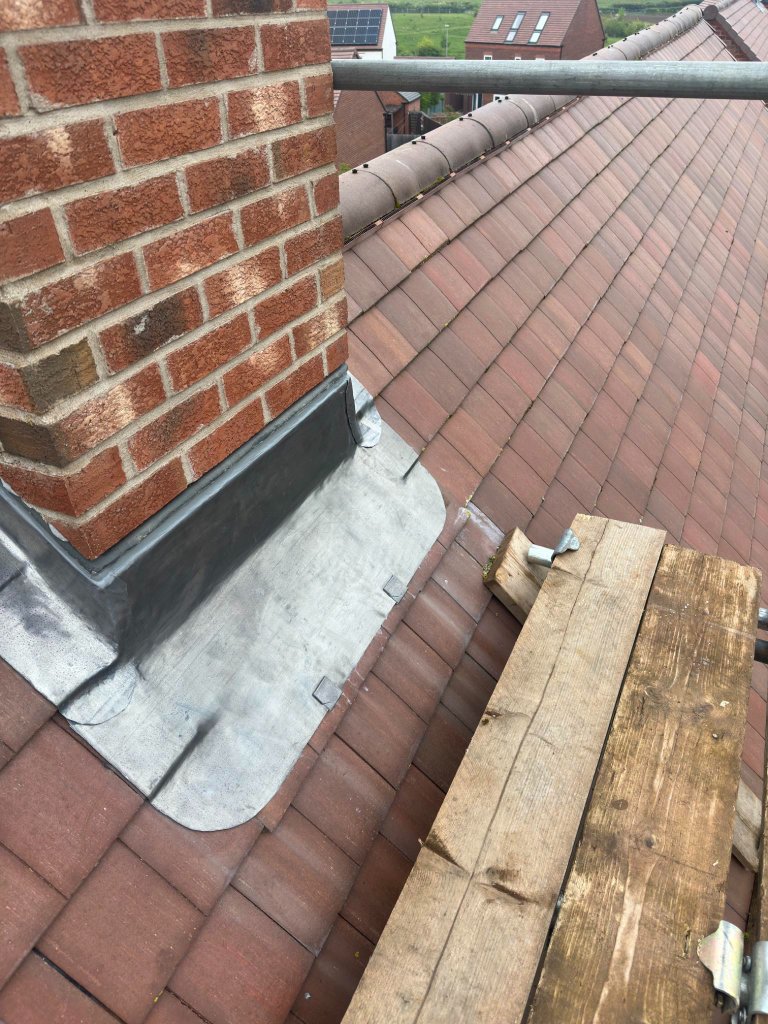
Chimneys, valleys, dormers, abutments and skylights are all potential failure points. Every one of them relies on correctly specified and carefully installed lead to keep water out. When that lead fails — cracks, lifts, pulls away from masonry, or was never installed properly in the first place — water finds a way in. And because lead failures are often hidden under tiles or behind cladding, they can cause damage for months or years before being traced to their source.
We have been dressing lead on Worcestershire roofs for over 30 years. It is not a glamorous part of the job, but it is one of the most important. When we carry out a new roof installation or a repair, the leadwork gets the same care as the tiles — because it is where the long-term performance of the roof is determined.
Our work
Leadwork Worcester — Our Work
Types of leadwork
Leadwork We Carry Out Across Worcestershire
Chimney Flashings
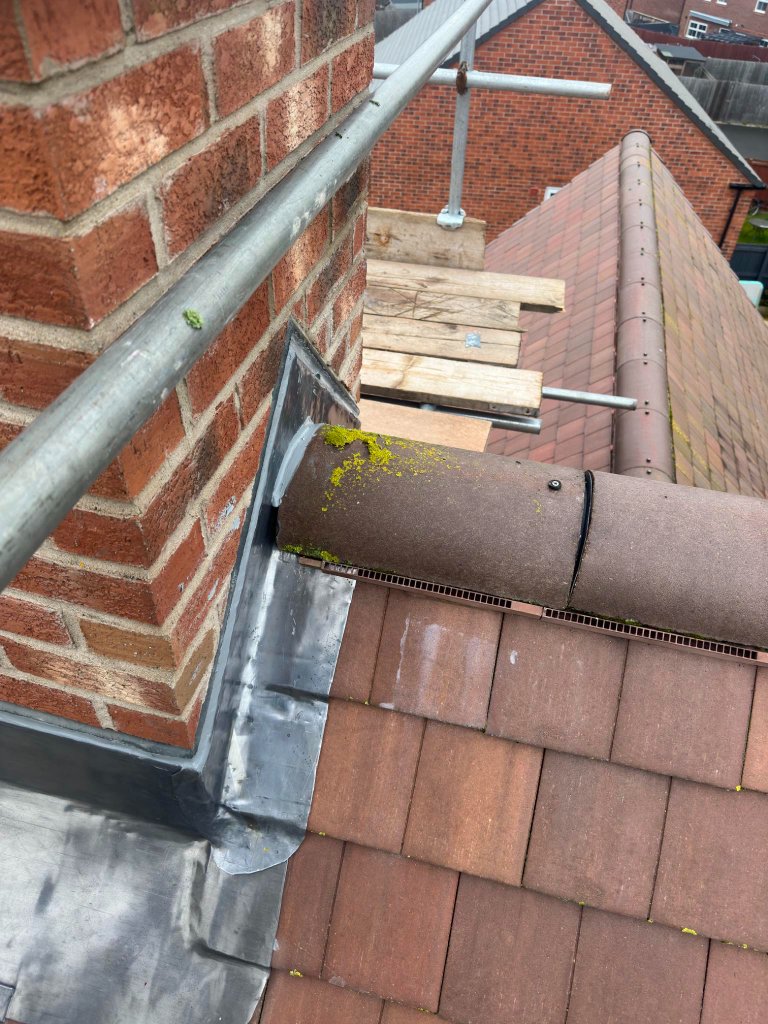
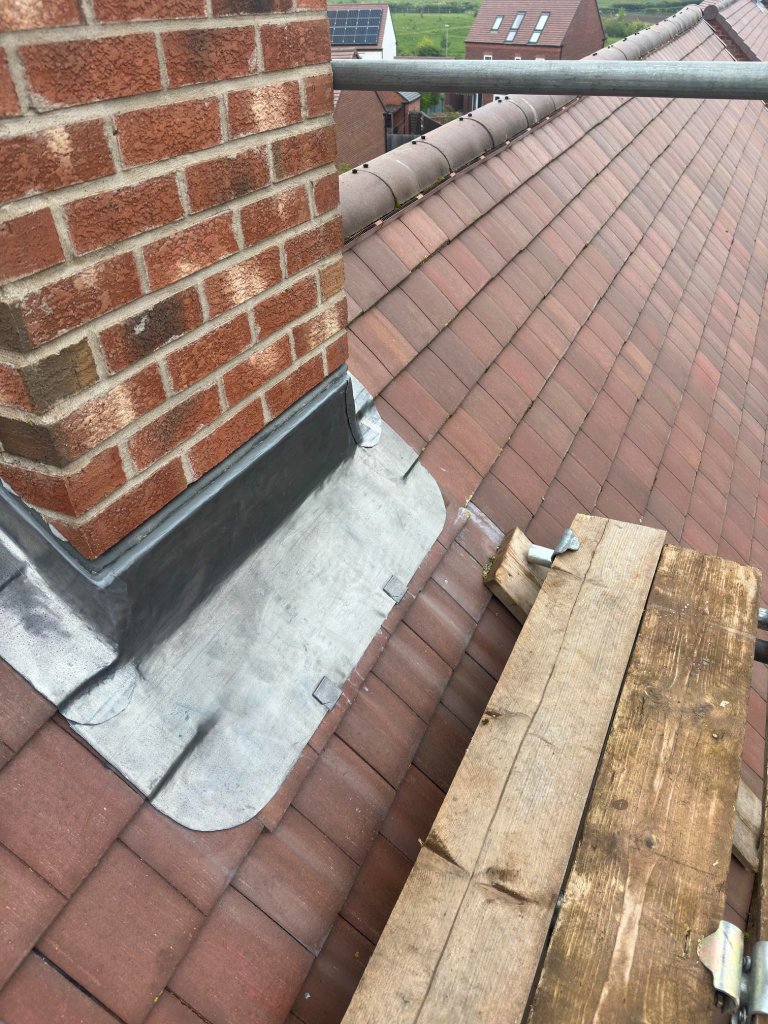
The junction between a chimney stack and the main roof covering is one of the most common points of water entry in Worcestershire homes. Lead step flashings, back gutters and soakers are the correct solution — not sealant, which fails within a few years.
Valley Linings
Open valleys between two roof planes need a durable lining to channel water away quickly. Lead-lined valleys are traditional, long-lasting and appropriate for period properties. Cut valleys or mortar-bedded valleys are less durable and often the source of persistent leaks.
Dormer Flashings
Dormers have multiple vulnerable junctions — where the dormer cheeks meet the main roof, along the sill, and at the head. Each one needs careful lead detailing to prevent water tracking behind the cladding or into the dormer structure.
Abutment & Parapet Flashings
Where a pitched roof meets a vertical wall — at extensions, side returns, or parapet walls — stepped lead flashings are required. These are a common failure point on older Worcestershire properties where original lead has cracked or lifted.
Skylight & Rooflight Surrounds
Factory-installed flashings on rooflights can deteriorate or lift over time. We re-dress the lead surround or replace the flashing kit to ensure the junction is watertight again.
Flat Roof Edge Details
Lead trim at the edges of flat roofs — forming a neat, watertight drip edge or upstand against a parapet — is a detail that is often skimped on. We dress lead correctly at the correct code for the application.
Warning signs
Signs Your Leadwork May Have Failed
Pricing guide
How Much Does Leadwork Cost in Worcester?
| Job type | Guide price | Notes |
|---|---|---|
| Chimney flashing repair (step flash) | £200 – £500 | Partial replacement or re-dressing existing lead |
| Full chimney lead strip and reflash | £500 – £1,200 | All four sides, including back gutter and cap |
| Valley lead re-line (per valley) | £400 – £900 | Depending on length and access |
| Dormer flashing replacement | £300 – £700 | Depends on dormer size and number of junctions |
| Abutment flashing (per run) | £300 – £600 | Stepped lead to wall junction, per linear run |
Estimates only, excluding VAT. Call for a free survey and written quote.
Customer reviews
What Our Customers Say
"Clear advice, tidy work and the leak was solved properly. The team explained what had failed and what needed doing without any pressure."
Sarah M.
Worcester, Worcestershire
"A professional service from quote to completion. Our roofline looks much sharper and the site was left spotless."
David R.
Droitwich, Worcestershire
"We needed a reliable roofer for a period property. The leadwork and slate detailing were completed beautifully."
Helen P.
Malvern, Worcestershire
"Fast response after storm damage and a very fair quote. Would happily recommend to anyone locally."
Mark T.
Bromsgrove, Worcestershire
Questions answered
Leadwork FAQs
Why does leadwork fail?+
Lead is a long-lived material — properly installed lead can last 60 to 100 years. Failures usually come from one of three sources: poor original installation (the most common), thermal movement causing stress cracking over decades, or oxidation and surface weathering on thinner lead used as a cost-cutting measure. When we find failed leadwork, we look at all three factors before recommending a repair or replacement.
Can you repair lead flashings rather than replace them?+
Yes, if the failure is localised and the surrounding lead is in good condition. A cracked section can be patched, a lifting flashing can be re-anchored and re-pointed, and a section that has pulled away from a masonry joint can be re-dressed. Where lead has failed across a larger area or has been repeatedly patched with sealant, replacement gives a more reliable result.
Why should I avoid silicone as a flashing repair?+
Silicone and mastic sealants are a short-term fix, not a proper solution for lead failures. They do not bond reliably to lead long-term, they harden and crack with temperature changes, and they often mask a problem rather than solve it — meaning water continues to track behind the seal. If you have had sealant applied to your flashings, it is worth having a proper assessment.
What code of lead should be used?+
Lead is graded by thickness into codes from 3 to 8. The appropriate code depends on the application — flat areas and large surfaces need heavier codes than small upstand details. Using undersized lead (code 3 or 4 where code 5 or 6 is required) is a common cause of premature failure. We specify the correct code for each application.
Does all leadwork need to be lead? Can alternatives be used?+
Traditional lead is still the best material for most flashings and detailing — it has a proven track record over centuries and, when correctly installed, outlasts everything else. Modern alternatives like Code Lead Substitutes or Wakaflex are used in some situations, but we recommend traditional lead wherever it is appropriate. We will advise if a specific situation suits an alternative.
How long does leadwork last?+
Properly installed lead, at the correct code for the application, should last 60 to 100 years. The joints and pointing around it may need periodic maintenance, but the lead itself rarely fails if it was correctly specified and installed in the first place. Poor-quality or incorrectly detailed lead can fail within 10 to 20 years.
Coverage
Leadwork across Worcestershire
We provide leadwork to every town and village across Worcestershire. Click your area for a local page with specific information and a direct quote request.
More services
Related roofing services
We cover every aspect of roofing — browse other services or view all services.