Table of contents
- 01Damaged or missing tiles
- 02Failed flashing and leadwork
- 03Blocked gutters and valleys
- 04Chimney and stack issues
- 05Condensation vs real leaks
- 06Why fast action matters
A roof leak is the one problem every homeowner dreads hearing about. Water coming through the ceiling is alarming, and the source is not always obvious — water travels along timbers and underlay before it finds a way through, so the stain on your ceiling might be metres away from the actual entry point. Understanding what causes roof leaks helps you catch problems early and know when to call a roofer.
This guide covers the six most common causes of roof leaks we see across Worcester, Malvern, Droitwich, Pershore, Evesham and the wider county. Some are quick fixes. Others point to bigger problems. In every case, the sooner you identify the cause, the cheaper the repair.
Damaged or Missing Tiles
The most obvious cause of a roof leak is also the most common: a damaged, cracked or missing tile. High winds lift tiles and break their nail fixings. Impact damage from falling branches or hail cracks individual tiles. Frost damage spalls the surface of concrete tiles over years, eventually creating holes.
A single missing or cracked tile usually causes a localised leak — water gets through the gap in that spot. This is the easiest leak to fix: replace the tile, and the problem is solved. But if tiles are failing across the roof (slipping repeatedly, cracking in multiple areas), the leak is a symptom of a bigger problem — a roof reaching the end of its life. See our 10 signs you need a new roof guide to check whether this is the case.
If you spot a slipped or missing tile, do not wait for it to leak. Water getting through the tile gap will saturate the underlay and timbers, and eventually find its way inside. A quick roof repair to replace the tile costs far less than fixing the water damage it causes.
Failed Flashing and Leadwork
Flashings are the metal strips (usually lead) that seal the junctions where the roof meets something else — a wall, a chimney, a valley, a pipe. Lead is the traditional material because it is durable, flexible and weatherproof. But lead does not last forever. It cracks, lifts, pulls away from the surface, and the mortar it is bedded into degrades.
Flashing failures are one of the most common causes of leaks that homeowners struggle to trace, because the water enters at the junction and travels along timbers before appearing inside.
Chimney Flashing
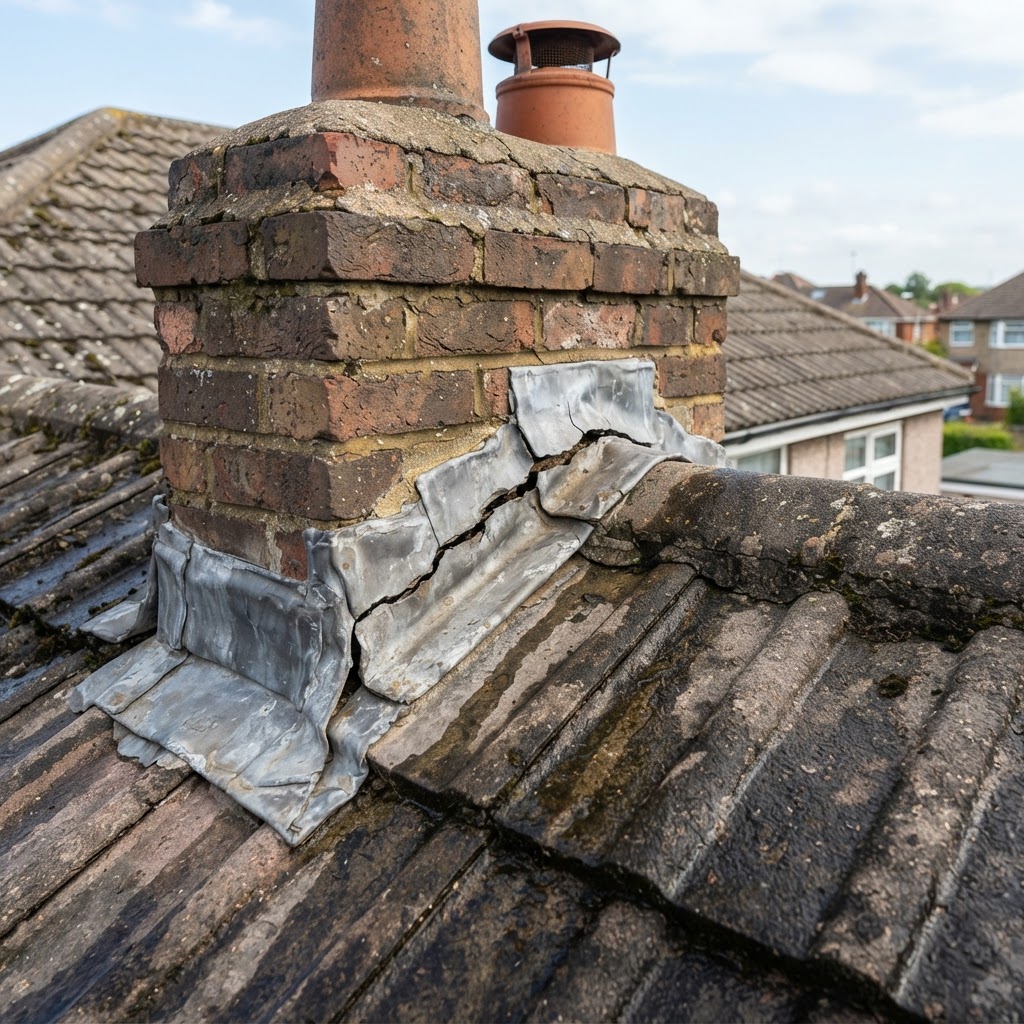
The flashing around a chimney stack — the step flashing up the sides and the apron flashing at the front — is a classic leak point. Lead cracks with age and temperature cycling. The mortar holding the flashing in place crumbles. Water gets behind the flashing and runs down the stack into the rooms below. If you have a damp patch on a chimney breast or on the wall where a chimney sits, the flashing is the likely culprit. Chimney repointing and flashing replacement usually solve it.
Valley Flashing
Valleys — where two roof slopes meet at an internal angle — channel large volumes of water. They are lined with lead or a proprietary valley trough. Over time, lead valleys crack at the fold lines, and debris builds up in the valley, causing water to back up and overflow under the tiles. A leaking valley often shows as a damp patch on the ceiling along the line of the valley. See our leadwork page for valley repair and replacement.
Abutment Flashing
Where a roof slope meets a vertical wall (an abutment), a lead flashing seals the gap. If this flashing lifts or cracks, water runs down the wall and under the roof covering. This is common on extension roofs where the new roof meets the existing house wall.
Blocked Gutters and Valleys
This one surprises people: a blocked gutter can cause a roof leak. When gutters fill with leaves, moss and debris, water cannot drain away. It backs up under the bottom row of tiles and soaks into the underlay and fascia. In valleys, the same thing happens — debris builds up, water overflows the valley sides, and gets under the tiles.
Signs of gutter-caused leaks include damp patches at the top of external walls, water running down the outside of the gutter during rain, and staining on the fascia boards. The fix is straightforward: clear the gutters and valleys. But if the blockage has been left long enough, the underlay at the eaves may be damaged and need replacing.
Regular gutter cleaning prevents this entirely. See our guide on how often gutters should be cleaned for a maintenance schedule.
Chimney and Stack Issues
Chimneys cause a disproportionate number of roof leaks. They sit proud of the roof, expose a large area of masonry to weather, and have multiple junctions with the roof covering. Common chimney problems include:
- Cracked or perished mortar in the brickwork joints, which lets water into the stack and down into the house
- Failed flashing where the chimney meets the roof
- Damaged flaunching — the mortar bed at the top of the stack that holds the pots — which cracks and lets water into the stack
- Spalling bricks where the face of the brick pops off due to frost damage
If you have a chimney that is not in use, consider whether it needs to be repointed, reflaunched, or even taken down below the roofline and capped. A chimney repair is often the answer to a persistent leak that has been misdiagnosed as a tile problem.
Condensation vs Real Leaks
Not all "leaks" are actually leaks. Sometimes what looks like a roof leak is condensation — moisture in the air inside the house condensing on cold surfaces in the loft. This happens when loft ventilation is poor and warm, moist air from the rooms below rises into the cold loft space and condenses on the underside of the underlay and timbers.
Signs that a "leak" might actually be condensation include: water appearing in the loft with no obvious entry point from above, damp timbers that are wet on the underside rather than the top, and problems that are worse in winter than in summer. Condensation is fixed by improving ventilation, not by repairing the roof covering — but it can cause real damage to timbers if left, so it needs addressing.
A roofer will be able to tell the difference between a genuine leak and a condensation problem during an inspection. Getting this diagnosis right matters — repairing a roof to fix a condensation problem will not work, and adding ventilation to fix a leak will not work either.
Why Fast Action Matters
Every cause of roof leak has one thing in common: the longer you leave it, the more expensive it gets. Water that gets through the roof does not just sit there. It soaks into timbers, causing rot. It saturates insulation, ruining its effectiveness. It runs down walls and damages decorations. It creates the damp conditions that allow mould to grow.
A tile that costs £5 to replace can cause £500 of damage to a ceiling if left for a month. A flashing repair that costs £400 can turn into £2,000 of timber replacement if the leak is ignored for a year. This is why we always say: if you suspect a roof leak, get it looked at now, not next month.
We offer emergency roofing across Worcester and Worcestershire for active leaks, and free inspections if you suspect a problem but have not got water coming in yet. If you are worried about a leak, get in touch or call 01905 349450.
Summary
The six most common causes of roof leaks are damaged or missing tiles, failed flashing and leadwork, blocked gutters and valleys, chimney and stack issues, condensation (which mimics a leak), and general roof aging. Most leaks are fixable with a targeted repair if caught early. The key is to act quickly — water damage to timbers, ceilings and insulation gets worse every day you wait. If you suspect a leak, a professional roof inspection will identify the cause and the fix before the damage spreads.
Related resources
FAQ
Frequently asked questions
What causes roof leaks?+
The most common causes are damaged or missing tiles, failed lead flashing around chimneys and valleys, blocked gutters and valleys, chimney stack problems (cracked mortar, failed flaunching), and condensation in poorly ventilated lofts. Each has different signs and different fixes.
How do I find a roof leak?+
Start in the loft: look for daylight gaps, water stains on timbers, and damp underlay. Trace the damp back from the ceiling stain, not straight up — water travels along timbers before it appears inside. But the only reliable way to find the exact entry point is a roofer getting up on the roof.
Are roof leaks covered by home insurance?+
Insurance typically covers sudden damage (such as storm damage dislodging tiles) but not wear and tear or gradual deterioration. If the leak is caused by an old, failing roof, it is usually a maintenance cost. Check your policy and speak to your insurer.
Can a small roof leak cause big damage?+
Yes. Water that gets through the roof soaks into timbers (causing rot), saturates insulation (ruining its effectiveness), and runs down to damage ceilings, walls and decorations. A tile that costs a few pounds to replace can cause hundreds of pounds of internal damage if left.
How fast should I act on a roof leak?+
Immediately. Every day water is getting through the roof, the damage to timbers, insulation and ceilings is getting worse and more expensive to fix. If you have an active leak, call an emergency roofer. If you suspect a problem, book an inspection — do not wait for it to become a crisis.
Is it a roof leak or condensation?+
Condensation mimics a leak — you get damp timbers and water in the loft without an obvious entry point from above. It happens when loft ventilation is poor. Signs include damp on the underside of timbers (not the top) and problems worse in winter. A roofer can tell the difference during an inspection.
Got a leak? Call Sure Roofing Worcester for a fast response.
Call Sure Roofing Worcester for a free, no-obligation quote. Same-day response across Worcestershire.